You Won’t Believe These Hidden Art Spaces in Victoria, Canada
Tucked away from the postcard-perfect gardens and historic tea rooms, Victoria, Canada hides a quietly brilliant art scene most tourists never see. I stumbled upon these unassuming studios and alleyway galleries by accident—and was blown away. Far from the crowds, local artists are shaping intimate, experimental spaces that pulse with creativity. This is art in its rawest, most authentic form. It doesn’t hang behind velvet ropes or require timed entry tickets. Instead, it thrives in converted garages, sunlit backrooms, and weathered laneways where inspiration flows freely and connection feels personal. For travelers willing to wander beyond the obvious, Victoria offers a rare gift: the chance to witness art not as performance, but as practice—a living, breathing dialogue between maker and place.
Beyond the Postcard: Rethinking Victoria’s Art Identity
Victoria is often celebrated for its polished aesthetics—immaculate flower beds at Butchart Gardens, the grand façade of the Empress Hotel, and afternoon tea served on fine china. These icons draw millions each year, and rightly so. Yet beneath this well-curated surface lies a different rhythm, one shaped not by tradition but by transformation. While guidebooks highlight colonial architecture and maritime history, they often overlook the city’s evolving cultural soul: its grassroots art movement. This quieter narrative unfolds in neighborhoods where creativity isn’t confined to institutions but spills into storefronts, alleys, and community halls.
What makes this underground scene so compelling is its authenticity. Unlike commercial galleries that cater to collectors and critics, these hidden spaces prioritize process over product. They invite visitors not just to look, but to linger—to ask questions, to hear an artist’s story, to witness a brushstroke mid-canvas. In doing so, they offer something increasingly rare in modern travel: genuine human connection. Stepping into one of these studios feels less like visiting a museum and more like being welcomed into a conversation.
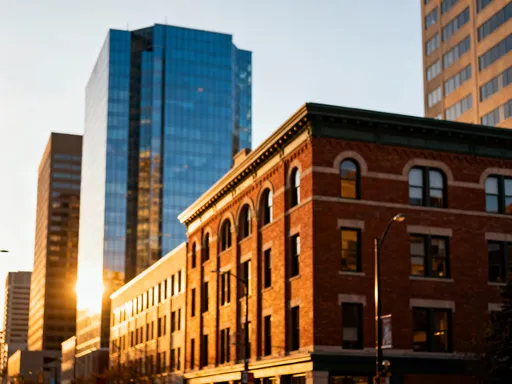
For the curious traveler, this shift in perspective can redefine what it means to experience a destination. Rather than ticking off landmarks, you begin to see Victoria through the eyes of those who live here. You notice textures in the brickwork, colors in unexpected corners, and rhythms in the daily life of neighborhoods like Chinatown and Fernwood. The city reveals itself not as a static postcard image, but as a layered, living canvas shaped by individual vision and collective spirit. And once you’ve seen it this way, you can’t unsee it.
The Rise of Grassroots Art Studios in Old Town
In Victoria’s Old Town district, creativity thrives in repurposed spaces—former print shops, old apothecaries, and even former fish markets now house small, independent artist studios. These intimate workspaces are often tucked behind unmarked doors or up narrow staircases, revealing themselves only to those who know where to look. What they lack in signage they make up for in character. Inside, you’ll find painters layering oils on canvas, ceramicists shaping clay at the wheel, and textile artists weaving stories into fabric. These are not display-only galleries; they are working environments where imagination takes physical form.
One of the best ways to experience these studios is during the monthly First Saturdays Art Crawl, a community-driven event that transforms Old Town into an open-air exhibition. On the first Saturday of every month, artists fling open their doors, offering the public a rare glimpse into their creative process. Visitors can watch a sculptor refine a bronze piece, chat with a printmaker about her technique, or sip locally roasted coffee while a musician tests a new composition in the corner. There’s no formal programming—just organic interaction, spontaneous conversation, and the quiet hum of making.
What sets these encounters apart is their informality. There’s no pressure to buy, no velvet ropes, no docents. Artists welcome questions and often share personal insights—their inspirations, challenges, and daily rituals. For many, this direct engagement is as vital as the art itself. It turns passive viewing into active participation, allowing travelers to form a deeper understanding of both the work and the person behind it. This kind of access is uncommon in larger cities, where art can feel distant or institutionalized. In Victoria, it remains refreshingly human-scale.
Many of these studios operate on a shoestring budget, sustained by passion rather than profit. Some are co-rented by multiple artists who share resources and support one another creatively. Others are single-artist sanctuaries, carefully curated to reflect personal aesthetic and workflow. What they all share is a commitment to keeping art accessible—not just to collectors, but to neighbors, passersby, and curious travelers. In a world where art is increasingly commodified, these spaces serve as quiet resistance, reminding us that creativity doesn’t need grand stages to matter.
Alleyway Galleries: Where Street Meets Soul
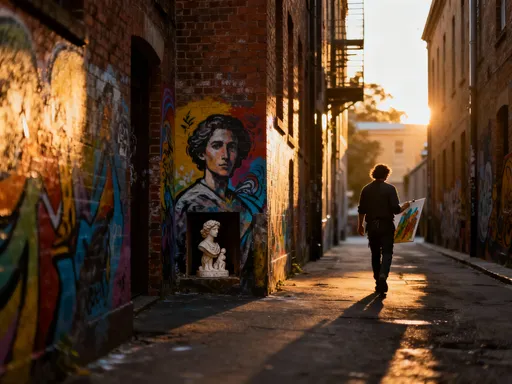
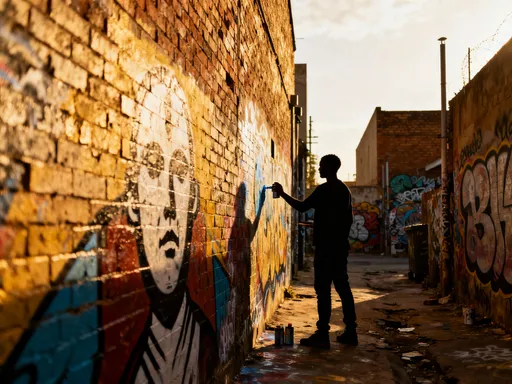
If you think galleries must have walls, roofs, and opening hours, Victoria’s alleyway art spaces will surprise you. Scattered throughout the downtown core, especially in and around Fan Tan Alley—the narrowest commercial street in Canada—unexpected bursts of creativity line the brick walls. These are not graffiti tags or vandalism, but carefully curated installations that blend street art with storytelling. Murals depict Indigenous symbolism, local wildlife, and abstract expressions of identity. Embedded in the walls are poetry panels, laser-cut metal sculptures, and reclaimed wood carvings that change with the light and weather.
Fan Tan Alley, historically a hub for Chinese merchants and immigrants, has evolved into a cultural corridor where past and present intersect. While the alley is known for its boutiques and eateries, its artistic edges are often overlooked. Look closely, and you’ll find hand-painted tiles commemorating community histories, ceramic mosaics shaped like dragon scales, and temporary installations by emerging artists. These works are not permanent—some last only a few months—but their impermanence is part of their power. They invite you to be present, to notice, to appreciate before they fade or are replaced.
Beyond Fan Tan, other laneways have been quietly transformed into micro-galleries. Government-supported initiatives and local arts councils have commissioned site-specific pieces that turn forgotten corners into destinations. One such corridor near Yates Street features a rotating mural program, where artists are invited to reinterpret the wall every six months. Another, behind a community center in James Bay, hosts a sound garden—metal chimes and wind-activated sculptures that sing in the coastal breeze. These spaces are free, accessible 24/7, and require no tickets or schedules. You stumble upon them, and in that moment of discovery, you become part of the art.
The beauty of alleyway galleries lies in their spontaneity. They don’t demand your attention; they reward your curiosity. A rainy afternoon walk might lead you to a mural that changes your mood. A quick detour could reveal a poem etched into stone that resonates with your current chapter of life. These encounters are fleeting but meaningful—like finding a handwritten note in a library book or hearing a song on the radio at just the right time. In a city often associated with gentility and order, these raw, unfiltered expressions add texture and depth.
Artist-Run Collectives: The Heartbeat of Innovation
At the core of Victoria’s underground art scene are artist-run collectives—nonprofit organizations and cooperatives that prioritize experimentation over commercial success. Among the most influential is Open Space Arts Society, a cornerstone of the city’s alternative art community since the 1970s. Housed in a modest building near the Inner Harbour, Open Space functions as a gallery, performance venue, and creative incubator. It’s not flashy, but it’s vital. Here, artists test bold ideas, host interdisciplinary projects, and engage in critical dialogue about art’s role in society.
What distinguishes Open Space and similar collectives is their commitment to risk. Unlike commercial galleries that favor safe, sellable work, these spaces encourage artists to fail, to explore, to question. Exhibitions might include video art, performance pieces, or interactive installations that challenge viewers to think differently. Workshops and artist talks are regular features, often free or by donation, fostering a culture of learning and exchange. For emerging artists, especially those working in non-traditional mediums, this support is invaluable.
Other collectives, like Studio 22 and Artswell, operate on similar principles, offering studio rentals, mentorship programs, and collaborative residencies. These spaces are often hidden in plain sight—above a café, behind a hardware store, or within a community center. They thrive on word-of-mouth and community involvement rather than advertising. Visitors are welcome, but the atmosphere is not touristy. It’s more like stepping into a creative living room—lived-in, authentic, and slightly unpredictable.
For travelers, engaging with these collectives offers a rare window into the artistic process. You might attend a live painting session, observe a rehearsal for a multimedia performance, or participate in a community art build. The emphasis is on participation, not perfection. These spaces remind us that art isn’t just something to consume—it’s something to do. And in a world that often values speed and efficiency, slowing down to witness creation in progress can be profoundly grounding.
Hidden Sculpture Gardens and Natural Canvases
Just beyond Victoria’s urban core, quieter spaces invite contemplation and connection with nature-infused art. One such place is the Art Farm at Elk Lake, a nonprofit retreat and exhibition space where land art and ecological practices converge. Spread across several acres of forest and meadow, the site features sculptures made from driftwood, stone, and reclaimed materials. Paths wind through installations that respond to the seasons—ice carvings in winter, woven willow domes in spring, and earthworks that shift with rainfall and root growth.
The Art Farm is not a formal garden with labeled plaques and guided tours. Instead, it operates on a self-guided, honor-system model. Visitors park at the edge of the property, follow hand-drawn maps, and explore at their own pace. Some pieces are obvious—a towering totem carved from fallen cedar. Others are subtle—a ring of stones arranged in a spiral, a poem nailed to a tree. The experience is meditative, encouraging mindfulness and presence. Children often run ahead, discovering hidden sculptures like treasure, while adults pause, reflect, and breathe deeply in the quiet.
Other natural art spaces include the Garry Oak meadows at Uplands Park, where local artists occasionally install temporary works that blend with the native flora. These are not permanent fixtures but seasonal interventions—woven grass installations, painted rocks, or sound sculptures activated by wind. Similarly, along the shores of Cordova Bay, driftwood artists have created quiet monuments to the tides, arranging found wood into abstract forms that stand until the next storm washes them away.
What unites these spaces is their impermanence and harmony with the environment. They don’t dominate the landscape; they listen to it. They ask viewers to slow down, to notice the way light filters through leaves, to hear the rustle of birds in the underbrush. In contrast to the curated stillness of indoor galleries, these outdoor installations are alive—changing, decaying, growing. They remind us that art, like nature, is a process, not a product. For families, couples, or solo travelers seeking peace, these spots offer a restorative counterbalance to the energy of the city.
Practical Tips for Exploring Victoria’s Under-the-Radar Art Scene
Discovering Victoria’s hidden art spaces requires a shift in mindset—from destination-driven tourism to open-ended exploration. Start by planning your visit around the First Saturdays Art Crawl, which takes place from 5 to 9 p.m. on the first Saturday of every month. This is when studios in Old Town, Chinatown, and Fernwood are most active, with artists present and refreshments often served. Check the Greater Victoria Art Council’s website for updated maps and featured locations.
For alleyway galleries and public installations, walking is the best mode of transport. Wear comfortable shoes and allow time to wander without a strict itinerary. Some of the most memorable discoveries happen when you take a wrong turn or pause to examine a side street. Carry a small notebook or use your phone to document pieces that move you—photography is generally welcome, but always ask before photographing artists at work.
When visiting artist studios or collectives, practice respectful engagement. Speak softly, avoid touching artwork unless invited, and be mindful of personal space. Many artists welcome conversation, but some are in the middle of deep creative work. A simple “May I look around?” goes a long way. If you enjoy a piece, consider purchasing a small item—prints, cards, or handmade ceramics—to support the artist directly. Even a donation to a nonprofit collective helps sustain these spaces.
Transportation options include the local bus system, which connects major neighborhoods, or bike rentals from downtown shops. The Regional District of Capital Transit provides reliable service, and many routes pass near key art districts. For remote spots like the Art Farm, a car is recommended. Always check opening times, as some spaces are only accessible during events or by appointment. And remember: the goal isn’t to see everything, but to experience a few moments of genuine connection.
Why Hidden Art Spaces Matter—And How They Change Travel
In an age of curated feeds and algorithm-driven itineraries, hidden art spaces offer something radical: authenticity. They remind us that culture isn’t something packaged for consumption, but something lived, shaped daily by ordinary people with extraordinary vision. When you stand in a quiet studio watching an artist mix paint by hand, or round a corner to find a poem carved into stone, you’re not just seeing art—you’re witnessing humanity in motion.
These experiences slow us down. They ask us to be present, to listen, to observe. In doing so, they transform tourism from a checklist into a practice of empathy. You begin to see Victoria not as a collection of attractions, but as a community of makers, dreamers, and keepers of beauty. You realize that every city has such spaces—quiet pockets where creativity thrives away from the spotlight. The challenge is to look beyond the obvious, to resist the pull of the familiar, and to wander with intention.
Ultimately, discovering hidden art spaces isn’t just about what you see—it’s about how you see. It cultivates a mindset of curiosity and respect, one that values process over polish, connection over convenience. It teaches us that the most meaningful travel moments often come not from grand landmarks, but from small, unscripted encounters. Victoria, with its understated elegance and resilient creative spirit, offers a powerful reminder: that beauty and meaning are not always announced with fanfare. Sometimes, they’re waiting quietly in an alley, a garden, or a studio with no sign—just an open door and a brush still wet with color.