Lost in the Soul of Chiang Mai: Hidden Temples and Quiet Wisdom
Have you ever walked into a place so still, so steeped in quiet reverence, that time seemed to pause? Chiang Mai isn’t just about bustling night markets or famous temples packed with tourists. Beyond the well-trodden paths lie cultural sanctuaries—ancient wats, community studios, and meditation corners—where the city’s true spirit hums softly. I wandered off-script and found a side of northern Thai culture most never see. This is where tradition breathes, uninterrupted. In these quiet enclaves, the rhythm of life moves not to the beat of commerce, but to the gentle cadence of prayer, craft, and contemplation. For the mindful traveler, Chiang Mai offers more than sights—it offers stillness, depth, and connection.
The Allure of Off-the-Path Culture in Chiang Mai
Travel has evolved from mere sightseeing into a quest for meaning. For many, especially those in midlife seeking renewal or reflection, the value of a journey lies not in how many places one checks off a list, but in how deeply one connects with a place. Chiang Mai, long celebrated for its golden temples and vibrant Saturday market, holds another layer beneath its tourist-friendly surface—one that rewards the curious, the patient, and the respectful. This quieter side of the city is not hidden by design, but by habit. Most visitors follow well-marked trails to Doi Suthep, Wat Phra Singh, and the Old City’s central shrines. These are undeniably beautiful, yet they often pulse with the energy of mass tourism—cameras clicking, voices echoing, shoes hastily removed and replaced.
Yet just a short distance away, sometimes only a ten-minute walk from the main roads, exist places where silence is honored, where incense curls upward without interruption, and where daily rituals unfold as they have for generations. These spaces—lesser-known temples, neighborhood meditation halls, and family-run craft studios—offer a different kind of enrichment. They are not curated for Instagram. Instead, they invite presence. The value of visiting such places lies not only in their historical or architectural significance, but in the opportunity they provide to witness life as it is lived, not performed. For the 30- to 55-year-old traveler, often balancing family, career, and personal well-being, these moments of authentic connection can be profoundly grounding.
Choosing to explore off-the-path culture is not about rejecting popular sites, but about expanding one’s understanding. It is a shift from consumption to participation, from observation to immersion. When one sits quietly in a small sala beside a local grandmother offering morning alms, or watches a monk carefully sweep temple steps at dawn, a different kind of learning takes place—one rooted in humility and attentiveness. This kind of travel nurtures not just curiosity, but compassion. It reminds us that culture is not a display, but a living, breathing practice. And in Chiang Mai, that practice continues in the spaces most people simply walk past.
Whispers of History: Hidden Temples Off the Beaten Track
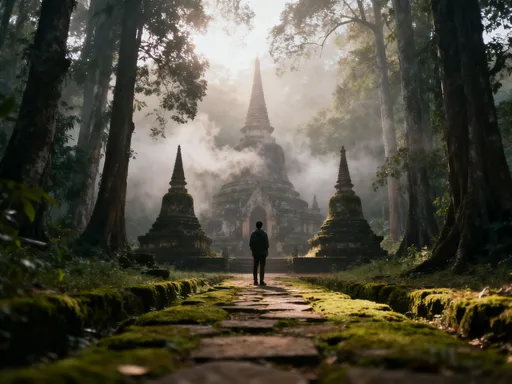
Among the most moving experiences in Chiang Mai are visits to temples that exist in harmony with nature and solitude. Wat Pha Lat, often called the "Hidden Temple of the Monks," is one such sanctuary. Nestled partway up Doi Suthep mountain along the old pilgrimage trail, it is bypassed by most tourists who head straight for the grand staircase and panoramic views of Wat Phra That Doi Suthep at the summit. Yet Wat Pha Lat offers something equally majestic, though far more intimate. Built in the 14th century as a resting place for pilgrims, it blends seamlessly into the forested hillside. Stone staircases wind through ferns and moss-covered walls, leading to quiet courtyards where Buddha images sit beneath spreading trees. A small waterfall feeds a ceremonial pool, its sound a constant, soothing presence.
Unlike the crowded summit temple, Wat Pha Lat feels alive with daily monastic rhythm. Monks walk silently between buildings, some pausing to meditate in shaded corners. The main hall, though modest, is rich with hand-carved teak doors and faded murals depicting Jataka tales. There are no loudspeakers, no souvenir stalls, no rush. Visitors are free to sit, breathe, and absorb the atmosphere. This is not a place to hurry through. It is a place to remember why one travels at all—to pause, to reflect, to feel small in the presence of something enduring.
Another profound site is Wat Umong, located at the base of Doi Suthep in a quiet, wooded area. Dating back to the 13th century, it is known for its ancient tunnel system—originally built for meditation retreats—carved into the hillside. Walking through these cool, dimly lit passageways, one can almost feel the centuries of contemplation embedded in the stone. Outside, the temple grounds stretch across a serene lake, with Buddha statues emerging from the water and shaded pavilions where locals come to read, rest, or practice mindfulness. A large seated Buddha, partially covered in gold leaf, gazes peacefully across the water. The air here carries a hush, broken only by birdsong and the occasional chime of a bell.
Both Wat Pha Lat and Wat Umong serve as reminders that in Theravāda Buddhism, the path is personal and internal. These temples were never designed for spectacle. Their power lies in their simplicity, their integration with nature, and their role as spaces for quiet growth. For the traveler seeking depth, visiting such places is not just educational—it is transformative. One does not need to be a practitioner to feel the weight of their stillness. A single hour spent here can recalibrate the mind, offering clarity often lost in the noise of daily life.
Living Traditions: Community-Based Cultural Spaces
Beyond temples, Chiang Mai’s soul thrives in its community spaces—places where culture is not preserved behind glass, but practiced in everyday life. In neighborhoods like Santiphab and Hai Ya, small neighborhood wats function as both spiritual centers and social hubs. Here, children chant scriptures after school, elders gather for tea and conversation, and festivals are organized by volunteers, not tour operators. These local wats often lack the grandeur of their famous counterparts, but they pulse with authenticity. A visitor who approaches with respect may be invited to observe a merit-making ceremony, or even participate in a simple offering of food to the monks.
Equally enriching are the artisan workshops scattered throughout the city’s quieter districts. In areas like Ban Tawai and Hang Dong, families have passed down crafts for generations—wood carving, umbrella painting, and natural dyeing using indigo, turmeric, and jackfruit wood. One can visit a small studio where a grandmother demonstrates how to extract deep blue from fermented indigo leaves, then hand-dye cotton using traditional batik techniques. These are not staged performances for tourists, but real workshops where visitors are welcome to watch, ask questions, and even try their hand at the craft.
Some community centers also host cultural exchange programs, such as temple-based language cafes where locals practice English while teaching basic Thai phrases to visitors. These gatherings take place in open-air salas, often in the late afternoon when the heat begins to fade. The mood is relaxed, the conversation warm. There is no agenda beyond mutual learning and friendship. For a traveler, especially one traveling solo or seeking meaningful interaction, these moments can be the most memorable of a trip. They break down the barrier between visitor and local, replacing transaction with connection.
Engaging with these spaces requires mindfulness. It means dressing modestly, speaking softly, and understanding that one is a guest. It means resisting the urge to photograph every moment. When done with sincerity, this kind of travel becomes a quiet act of respect—a way of honoring the people whose lives unfold in these spaces every day. And in return, visitors often receive something intangible but powerful: a sense of belonging, even if only for an hour.
The Art of Stillness: Meditation and Mindfulness in Everyday Settings
In Chiang Mai, mindfulness is not a trend—it is a tradition. While commercial meditation retreats cater to international visitors, there are quieter, less formal opportunities to experience the practice as it is lived by locals. Many smaller temples and forest monasteries welcome visitors to join morning meditation sessions, often beginning before sunrise. These gatherings are simple: participants sit on floor cushions in a quiet hall, eyes closed, following the breath under the guidance of a monk or lay teacher. There are no apps, no playlists, no elaborate instructions—just silence, patience, and presence.
One such place is a small forest retreat near the Mae Rim Valley, accessible by songthaew or bicycle. The path to the meditation hall winds through rice fields and fruit trees. Upon arrival, visitors remove their shoes and are offered a cup of herbal tea. The session lasts 30 to 45 minutes, followed by a brief Dhamma talk in Thai, with simple English summaries available. The atmosphere is gentle, non-judgmental. No one expects perfection. The goal is not to “clear the mind,” but to notice—to observe thoughts without clinging, to return again and again to the breath.
For the modern traveler, accustomed to constant stimulation, even a short session can be surprisingly powerful. The body slows. The mind, usually racing ahead to the next task, begins to settle. In that stillness, a different kind of awareness emerges—one that notices the coolness of the floor beneath the knees, the sound of wind in the trees, the faint scent of sandalwood. These moments do not require belief or conversion. They require only willingness to be present.
Practicing mindfulness in such a setting is not about achieving enlightenment, but about remembering balance. For women in their 30s, 40s, and 50s—often juggling roles as mothers, professionals, and caregivers—this kind of pause can feel like a gift. It is not escapism, but reconnection. And the beauty of Chiang Mai is that such experiences are not locked behind expensive retreat fees or long-term commitments. They are woven into the fabric of daily life, available to anyone who seeks them with an open heart.
How to Find These Places Without a Map
The most meaningful discoveries in Chiang Mai are rarely found through guidebooks or GPS pins. They come through conversation, curiosity, and a willingness to wander. One of the best ways to uncover hidden gems is to talk to people—gently, respectfully, and with genuine interest. A monk sweeping the temple grounds might point you toward a quiet meditation hall. A tea vendor at a local market might mention a family-run weaving studio just off the main road. A librarian at a community center might invite you to a weekend lantern-making workshop.
Language is not a barrier. A simple smile, a polite greeting of "Sawasdee ka," and a few basic phrases go a long way. Many locals appreciate the effort, even if the pronunciation is imperfect. Asking, "Is there a quiet place nearby where people meditate or practice crafts?" can open unexpected doors. The key is to listen more than speak, to observe more than photograph.
Technology can help, but subtly. Instead of relying on mainstream travel apps, consider exploring local community boards—physical ones in cafes or libraries, or digital ones on neighborhood Facebook groups. Some community tourism initiatives share information through word-of-mouth or small signage in local languages. The goal is not to "find" these places like trophies, but to be invited into them through mutual respect.
When visiting sacred or community spaces, certain guidelines ensure one’s presence is welcome. Dress modestly—shoulders and knees covered, shoes removed before entering halls. Speak softly. Avoid using flash photography or treating people as subjects. Never touch religious images or step over offerings. These are not rules to fear, but signs of care. They reflect the understanding that some places are not for entertainment, but for reverence. By honoring them, travelers become part of the harmony, not a disruption.
Why Timing Matters: Seasons, Hours, and Local Rhythms
In Chiang Mai, the rhythm of life follows natural and cultural cycles. To experience its quieter side, one must align with these rhythms. Early mornings are often the most peaceful—temples are clean and empty, monks are making their rounds, and the air is cool. Between 5:30 and 7:00 a.m., many local wats hold morning chanting and alms-giving. Observing these rituals from a respectful distance offers a glimpse into the spiritual heartbeat of the city.
Weekdays are generally quieter than weekends, especially in temple and community spaces. While Saturday and Sunday markets draw crowds, weekday afternoons often find neighborhood salas occupied by elders reading or playing chess, or students practicing music. These times offer better opportunities for quiet connection and unhurried observation.
Seasons also shape the experience. The cool season, from November to February, is ideal for walking and exploration. The skies are clear, the temperatures mild. This is also when many local festivals take place, such as Por Song Daeng, a lesser-known celebration honoring ancestors and community elders. Unlike the large-scale Yi Peng lantern festival, Por Song Daeng is low-key, family-centered, and deeply rooted in local tradition. Participating—even simply by attending a neighborhood gathering—offers insight into values of gratitude and continuity.
The rainy season, from July to October, brings its own beauty. The city turns lush and green, and temples surrounded by forest feel even more secluded. While some outdoor activities may be limited, this season is perfect for indoor crafts, meditation, and quiet reflection. The sound of rain on temple roofs, the scent of wet earth, the slower pace—all contribute to a deeper sense of calm. By adjusting one’s schedule to match the local way of life, the traveler moves from being an observer to a temporary participant in the flow of Chiang Mai’s days.
Travel That Gives Back: Supporting Cultural Preservation
Meaningful travel is not just about what one takes away, but what one leaves behind. In Chiang Mai, there are quiet but powerful ways to support the preservation of culture and community. One of the simplest is respectful donation. At smaller temples and meditation centers, a small offering—placed silently in a donation box—can help maintain the grounds, support monks, or fund community programs. It is not about the amount, but the intention. A note of gratitude, left with the donation, can mean as much as the gift itself.
Another way to contribute is by participating in cultural classes. Many artisan families welcome visitors to learn traditional crafts—umbrella painting, fruit carving, herbal compress making—not as photo ops, but as genuine workshops. The fee for such classes directly supports the families and helps keep these skills alive. For travelers, it is a chance to create something with their hands, to carry home not just a souvenir, but a memory of making.
Supporting community-based tourism initiatives is equally impactful. These programs—often run by local cooperatives—offer guided visits to neighborhood wats, craft villages, or organic farms. They ensure that tourism benefits residents directly, not just large companies. By choosing such experiences, travelers help sustain the very culture they have come to admire.
Ultimately, the deepest form of giving back is mindfulness itself. It is the decision to move slowly, to listen deeply, to honor the sanctity of quiet spaces. It is the understanding that culture is not a performance, but a way of life. When travelers approach Chiang Mai with humility and care, they do more than visit—they participate in preservation. And in doing so, they help ensure that the soul of this city—its hidden temples, its quiet wisdom, its living traditions—continues to breathe, undisturbed, for generations to come.