Why Yoga Meditation Isn’t Working for You (And What to Fix)
You’ve tried yoga and meditation, hoping for calm, clarity, and better health. But maybe nothing shifted—or worse, you feel more stressed. You're not alone. Many people practice daily yet see little change, not because they’re failing, but because small mistakes quietly block results. This isn’t about doing more—it’s about doing it right. Let’s explore the hidden missteps and how fixing them can finally unlock real progress.
The Misleading Promise of Quick Calm
Many begin yoga and meditation with the quiet hope of instant relief. After a long day of managing household duties, caring for children, or supporting aging parents, the idea of sitting still and breathing deeply feels like a promise of peace. Yet when that peace doesn’t arrive—when thoughts race, emotions linger, or the body remains tense—disappointment sets in. The expectation of immediate calm is one of the most common reasons people give up. They believe they are failing the practice, when in truth, the practice has been misunderstood from the start.
Yoga and meditation are not emergency switches for stress. They are systems of gradual recalibration. Just as a garden does not bloom the day seeds are planted, the mind and body require consistent nurturing before transformation becomes visible. Traditional Chinese wellness principles emphasize this truth: balance is not achieved through intensity, but through regular, gentle attention. The concept of Qi—the vital energy that flows through the body—thrives on rhythm and harmony, not sudden bursts of effort. When Qi is weak or blocked, it takes time and steady support to restore its flow.
Modern wellness culture often promotes quick fixes—ten-minute meditations for instant clarity, five-day yoga challenges for total transformation. While these can offer moments of relief, they rarely lead to lasting change. The real work happens in the unseen shifts: a slightly deeper breath, a moment of patience in frustration, a subtle release of tension after weeks of practice. These are not dramatic, but they are meaningful. Recognizing them requires a shift in mindset—from chasing results to honoring the process.
For women in their 30s to 55s, who often carry the emotional and physical weight of family, career, and personal well-being, this patience is especially important. The goal is not to silence the mind completely or to achieve perfect stillness. It is to build resilience, awareness, and a stronger connection between body and breath. When expectations are adjusted to reflect this, frustration fades, and the practice becomes sustainable.
Wrong Posture, Wrong Flow: How Form Breaks the Practice
Posture is more than physical alignment—it is the foundation of energy flow. In yoga, even a slight misalignment can disrupt the entire practice. A rounded spine in a forward bend, locked knees in a standing pose, or collapsed shoulders in seated meditation may seem minor, but they can create tension that travels through the body and mind. Many practitioners, especially those learning from online videos or apps, unknowingly adopt postures that strain joints, compress the lower back, or restrict breathing. Over time, these habits don’t just limit benefits—they can lead to discomfort or injury.
From the perspective of Traditional Chinese Medicine (TCM), the body’s meridians—pathways through which Qi moves—can be obstructed by poor posture. For example, slumping forward compresses the chest and diaphragm, restricting the flow of Qi to the heart and lungs. This can contribute to fatigue, shallow breathing, and a sense of emotional heaviness. Similarly, overextending the neck or locking the jaw during meditation may seem like focus, but it actually creates tension in the upper meridians, leading to headaches or irritability.
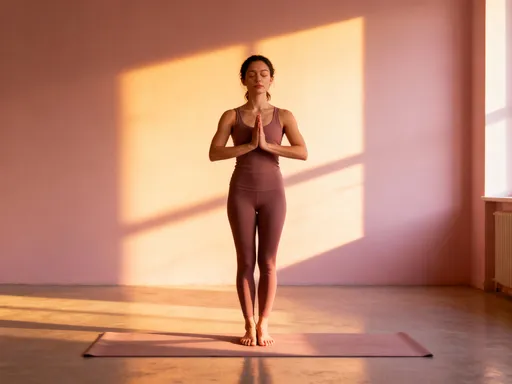
Common mistakes in foundational poses often go unnoticed. In Mountain Pose (Tadasana), feet may be too close together, reducing stability. In Cat-Cow, the movement may originate from the arms rather than the spine, missing the intended spinal wave. In Child’s Pose, the hips may not settle back fully, keeping the lower back tense. Each of these small errors diminishes the pose’s ability to support relaxation and energy flow.
The solution is not perfection, but awareness. Practitioners can begin by grounding the feet evenly, lengthening the spine, and relaxing the shoulders away from the ears. Using a mirror, wall, or gentle feedback from a trained instructor can help identify misalignments. Props like blocks, straps, or folded blankets can provide support, especially for those with limited flexibility or joint sensitivity. The goal is not to force the body into a shape, but to allow it to open naturally over time. When form supports function, the practice becomes not only safer but more effective.
Breath Mistakes That Kill Meditation Gains
Breathing is the invisible thread that connects movement and stillness. Yet many people, even after months of practice, breathe in ways that undermine their efforts. Shallow chest breathing, rapid inhales, or holding the breath unconsciously—all of these patterns keep the nervous system in a state of low-grade stress. This makes it nearly impossible to access the deep relaxation that meditation promises. Without proper breath, even the most perfect posture falls short.
In TCM, breath is directly linked to Qi. The lungs are considered the “delicate organ” that governs Qi and controls respiration. When breathing is shallow or erratic, Qi becomes deficient or stagnant. This can manifest as fatigue, anxiety, or a feeling of being “stuck.” Modern physiology supports this: shallow breathing reduces oxygen delivery to the brain and muscles, while deep, diaphragmatic breathing activates the parasympathetic nervous system—the body’s natural relaxation response.
Many practitioners mistakenly believe that strong, forceful breaths are better. Some follow intense breathing techniques without understanding their purpose or risks. But for sustainable calm, the breath should be smooth, even, and effortless. The most effective method is diaphragmatic breathing—allowing the belly to rise on the inhale and fall on the exhale. This engages the diaphragm fully, massages the internal organs, and signals safety to the brain.
A simple way to check breath quality is to place one hand on the chest and one on the belly. If the chest rises more than the belly, the breath is likely too shallow. Another sign of flawed breathing is tension in the neck or shoulders during inhalation. To correct this, practitioners can begin by lying down, placing a small book on the belly, and focusing on lifting the book with each breath. Over time, this pattern can be carried into seated meditation and daily life. When breath is aligned, focus deepens, and the body naturally settles into stillness.
Timing and Rhythm: Why Practice Scheduling Matters More Than You Think
When you practice matters as much as how you practice. Many people squeeze yoga or meditation into the few minutes before bed, hoping to unwind after a long day. But if the mind is still racing from work, family demands, or screen time, this late practice often becomes another task on the to-do list—something to “get through” rather than experience. The result is shallow engagement and minimal benefit.
Traditional Chinese Medicine maps the body’s energy to a 24-hour cycle, with specific organs and meridians most active at certain times. For example, the hours between 5 a.m. and 7 a.m. are governed by the large intestine, a time of natural elimination and clarity. This makes early morning an ideal window for meditation, as the mind is naturally quieter and the body is beginning its daily rhythm. Similarly, late afternoon, between 3 p.m. and 5 p.m., is linked to the bladder meridian and can be a good time for gentle movement to release accumulated tension.
That said, not everyone can rise at dawn. The key is to find a consistent rhythm that works with your natural energy patterns. Some women feel most alert in the late morning, while others unwind best with a short session after dinner. The goal is to practice when distractions are minimal and the body is not overly fatigued. Avoiding practice immediately after eating, during high-stress moments, or when emotionally overwhelmed increases its effectiveness.
Creating a rhythm doesn’t require rigid scheduling. Even ten minutes at the same time each day—such as after the children leave for school or before starting dinner—can build a sustainable habit. The consistency itself becomes a signal to the nervous system: this is a time to slow down, to return to center. Over time, the body begins to anticipate and welcome this pause, making it easier to access calm and focus.
The Overlooked Role of Environment and Intention
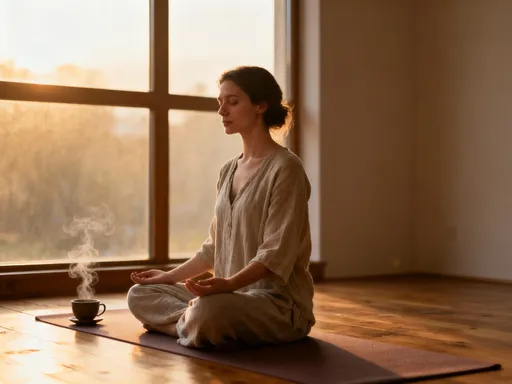
Where you practice shapes how you experience it. A cluttered corner filled with laundry, electronics, or household noise may be convenient, but it sends subtle signals of distraction and urgency. The mind picks up on these cues, making it harder to settle into stillness. In contrast, a dedicated space—even a small one—can become a sanctuary for renewal. This is where principles from feng shui and behavioral psychology converge: the environment influences the mind.
Feng shui teaches that energy, or Qi, flows more freely in clean, uncluttered spaces. Sharp corners, tangled cords, or bright screens can create “poison arrows” of chaotic energy. To support calm, choose a quiet corner with soft lighting, natural elements like plants or wood, and calming colors such as soft blues, greens, or earth tones. Remove electronic devices or at least silence notifications. A simple mat, a cushion, and perhaps a candle or essential oil diffuser can transform an ordinary space into a place of intention.
Intention is equally important. Starting practice without a clear purpose—just “to do yoga”—can lead to mechanical repetition. But when a personal intention is set, such as “I practice to cultivate patience” or “I breathe to release tension,” the mind becomes more engaged. This is not about grand goals, but small, meaningful commitments. Writing the intention on a card or repeating it silently before beginning helps anchor the practice in purpose.
For women managing complex lives, this intentional pause can be a powerful act of self-care. It is not selfish, but necessary. A clear environment and a focused intention create the conditions for deeper connection—to breath, to body, and to self. Over time, this space becomes a refuge, a place where renewal is not only possible but expected.
When More Practice Backfires: The Risk of Overdoing It
There is a quiet danger in believing that more is better. Some practitioners, eager for results, push into advanced poses, extend meditation sessions beyond comfort, or practice multiple times a day. But in the pursuit of progress, they may unknowingly deplete their energy. Symptoms like insomnia, irritability, digestive issues, or persistent fatigue can be signs of spiritual overtraining—a state where the practice, meant to restore, actually drains.
In TCM, this imbalance is understood through the lens of Yin and Yang. Yin represents rest, nourishment, and internal reflection. Yang represents activity, movement, and outward expression. Meditation and gentle yoga are Yin practices. When done in excess without adequate rest, they can become Yang—forcing the mind to “perform” stillness. This creates internal conflict, not peace.
The body often gives subtle warnings: a clenched jaw during meditation, restlessness in Savasana, or a sense of dread before practice. These are not signs of failure, but invitations to adjust. True progress includes knowing when to slow down, when to rest, and when to simply be. Rest is not a reward for hard work—it is part of the work.
For women in midlife, who may already face hormonal shifts, sleep disturbances, or emotional sensitivity, honoring balance is crucial. A ten-minute mindful breath session may be more beneficial than a forced thirty-minute meditation. A gentle stretch before bed may serve better than an intense evening flow. Listening to the body’s signals—rather than external expectations—leads to sustainable growth. Moderation is not weakness; it is wisdom.
Putting It All Together: A Sustainable Routine That Works
Real transformation in yoga and meditation comes not from effort, but from alignment—with the body, breath, timing, and intention. A sustainable routine doesn’t require hours of practice or perfect conditions. It begins with small, mindful choices that build over time. Start with five to ten minutes daily, choosing a consistent time and quiet space. Focus on grounding the feet, aligning the spine, and deepening the breath. Let go of the need to “achieve” stillness—instead, allow presence to emerge naturally.
Combine gentle movement with breath awareness. A simple sequence—Cat-Cow, Child’s Pose, Seated Forward Bend—can release tension and prepare the body for stillness. Follow with a short meditation, focusing on the rise and fall of the belly. If the mind wanders, gently return to the breath. Set a quiet intention, such as “I am here” or “I release what I cannot control.” Over time, expand the practice as energy allows, always prioritizing quality over quantity.
This approach honors both modern life and ancient wisdom. It is not about perfection, but presence. It is not about doing more, but doing it wisely. When common mistakes are corrected—when posture supports flow, breath fuels calm, timing aligns with rhythm, and environment nurtures focus—real progress becomes possible. The benefits are not always dramatic: a little more patience, a little less reactivity, a deeper sense of stability. But these small shifts, accumulated over time, lead to lasting vitality. Yoga and meditation are not quick fixes. They are lifelong companions on the journey to well-being.