Why My Yoga Meditation Flopped at First — And What Actually Fixed My Emotions
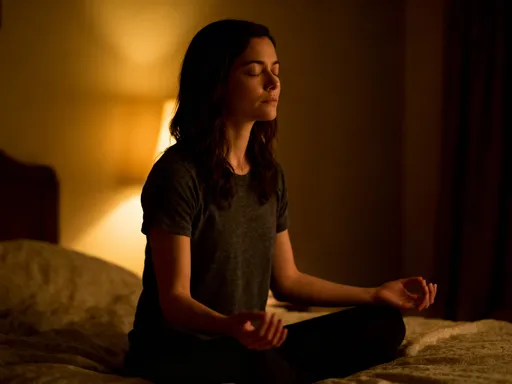
I used to think yoga and meditation were instant fixes for stress and mood swings. I tried them, expecting peace, but felt worse—frustrated, restless, emotionally stuck. Turns out, I wasn’t doing it wrong; I was missing the real foundation. Drawing from both traditional Chinese wellness principles and modern emotional science, I discovered that calming the mind isn’t about forcing stillness. It’s about working *with* your body’s energy, not against it. This is what finally helped me regulate my emotions—without the burnout.
The Emotional Crash That Started It All
For years, I believed that if I just practiced yoga long enough and meditated consistently, my anxiety would dissolve. I followed popular routines: 20-minute guided meditations every morning, evening Vinyasa flows, gratitude journaling before bed. Yet, despite this disciplined self-care regimen, I found myself overwhelmed—crying during grocery shopping, snapping at my children over small things, lying awake at 2 a.m. with racing thoughts. My emotional resilience was crumbling, even as I checked every wellness box.
The turning point came after a particularly difficult week. I had completed a 30-day yoga challenge, meditated daily, and avoided caffeine and sugar. On paper, I was doing everything right. But emotionally, I felt more fragile than ever. That’s when I realized: consistency alone wasn’t the answer. In fact, my rigid routine might have been making things worse. I had mistaken repetition for healing, discipline for progress. The deeper issue wasn’t lack of effort—it was misalignment. My practices weren’t matching my actual emotional state. I was trying to calm a storm with tools designed for gentle breezes.
This moment of clarity led me to question the one-size-fits-all approach to mindfulness. Like many women in their 30s to 50s, I was juggling roles—mother, partner, professional, caregiver—each with its own emotional weight. The stress wasn’t just mental; it was physiological, stored in my shoulders, jaw, and chest. I needed a system that honored that complexity, not one that asked me to suppress it in the name of ‘peace.’ That’s when I began exploring how energy, emotion, and body wisdom intersect—starting with ancient Chinese wellness concepts that view emotional health as inseparable from physical flow.
Why “Just Breathe” Isn’t Enough
We’ve all heard the advice: “Just breathe.” It’s repeated in meditation apps, therapy sessions, and even pediatrician visits. While breathing is foundational, treating it as a universal reset button oversimplifies the emotional regulation process. For someone already feeling emotionally flooded, being told to “just breathe” can feel dismissive—or worse, trigger frustration. The problem isn’t the breath itself, but the assumption that stillness and suppression are the goals of meditation.
Modern neuroscience confirms that emotions are not just mental experiences—they are physiological events. When we feel anger, sadness, or fear, our nervous system activates, releasing stress hormones and altering blood flow, muscle tension, and heart rate. In traditional Chinese wellness, this is understood as disruptions in Qi—the vital energy that flows through meridians in the body. When emotions are not processed, Qi can become stagnant, particularly in areas like the liver, heart, and spleen. This stagnation manifests as irritability, fatigue, or emotional numbness—exactly what I was experiencing despite my meditation practice.
The flaw in generic mindfulness advice is that it often encourages emotional suppression under the guise of ‘observing without judgment.’ While non-reactivity is valuable, pretending emotions don’t exist doesn’t dissolve them—it buries them. And buried emotions don’t vanish; they resurface as tension, insomnia, or sudden outbursts. True emotional regulation isn’t about silencing the mind, but allowing space for feelings to move through the body. This requires more than passive breathing—it demands awareness, timing, and movement that supports the body’s natural rhythms.
The Hidden Mismatch: Yoga Styles vs. Emotional Needs
Not all yoga is created equal—especially when it comes to emotional regulation. I once believed that a vigorous Vinyasa class would ‘burn off’ my stress. Instead, I often left more agitated, my heart racing, my mind buzzing. It wasn’t until I studied the energetic effects of different yoga styles that I understood why. High-intensity flows increase sympathetic nervous system activity—the same system activated during stress. For someone already in a heightened emotional state, this can deepen dysregulation rather than relieve it.
In contrast, gentler practices like Yin yoga or restorative styles activate the parasympathetic nervous system, promoting relaxation and recovery. But even these aren’t universally effective. What I discovered through integrating Chinese movement principles was the importance of meridian-focused motion. Unlike Western yoga, which often emphasizes flexibility and strength, traditional Chinese movement arts like Qigong prioritize the smooth flow of Qi through energy channels. Simple, repetitive motions—like lifting the arms slowly or rotating the wrists—are designed to unblock stagnation and restore balance.
The key insight was personalization. Matching your practice to your emotional state is more effective than following a trending routine. If you’re anxious, a fast-paced flow may worsen your symptoms. If you’re emotionally drained, a passive stretch might not provide enough stimulation to re-engage your system. Instead, consider your energy level and emotional tone before choosing your practice. A woman feeling overwhelmed may benefit more from five minutes of seated Qigong than a 45-minute power yoga class. The goal isn’t to complete a workout—it’s to restore equilibrium.
Meditation Mistakes That Worsen Anxiety
Meditation is often praised as a cure-all for anxiety, but certain approaches can backfire—especially for women navigating hormonal shifts, caregiving stress, or chronic fatigue. One of the most common pitfalls is sitting for too long without preparation. Expecting a beginner—or even an experienced practitioner—to sit in silence for 20 minutes and achieve mental clarity is unrealistic. For someone already struggling with racing thoughts, this can create a sense of failure, increasing anxiety rather than reducing it.
Another mistake is ignoring body signals during meditation. Many are taught to ‘sit still’ and ‘let thoughts pass,’ but the body often communicates distress through tension, restlessness, or discomfort. Pushing through these signals reinforces the idea that emotions must be endured, not understood. In Chinese philosophy, the *Shen*—often translated as spirit or mind—is deeply connected to the heart and regulated by balanced Qi. When Qi is disrupted, the Shen becomes unsettled, leading to insomnia, distractibility, or emotional volatility. Forcing stillness without addressing the underlying energy imbalance only aggravates the issue.
A more effective alternative is moving meditation—practices that combine gentle motion with breath awareness. Walking slowly while focusing on each step, swaying side to side with the breath, or tracing circles with the hands can anchor attention without demanding rigid stillness. These practices allow the mind to settle while honoring the body’s need for movement. They also align with the Chinese concept of harmonizing body and spirit, creating conditions where the Shen can rest naturally, not be forced into silence.
Rewiring the Routine: The 3-Step Reset
After years of trial and error, I developed a simple, science-backed method that finally helped me regulate my emotions without burnout. It’s not about adding more time to my day, but about working smarter with the energy I already have. The 3-Step Reset combines breath, movement, and intention—each step grounded in both modern physiology and traditional Chinese wellness principles.
Step 1 is diaphragmatic breathing with sound, such as low humming or gentle sighing. Research shows that humming activates the vagus nerve, which regulates the parasympathetic nervous system and lowers heart rate. In Chinese medicine, sound is considered a form of vibration that clears blockages in specific organs—for example, the ‘Xu’ sound for the liver, which helps release anger and frustration. Even 60 seconds of humming can shift your nervous system from fight-or-flight to rest-and-digest, making it an accessible tool during stressful moments.
Step 2 involves slow joint mobilization—gentle movements like neck rolls, wrist circles, or ankle rotations. These micro-motions stimulate synovial fluid production and improve circulation, but more importantly, they disrupt patterns of physical stagnation linked to emotional holding. In Chinese practice, joints are seen as gateways for Qi flow. When they’re stiff or underused, energy becomes trapped. Mobilizing them—even for two minutes—can create a sense of release, often accompanied by a deep sigh or sudden clarity.
Step 3 is micro-meditations tied to daily cues. Instead of setting aside time for formal practice, I anchor brief moments of awareness to routine activities: taking three conscious breaths while waiting for the kettle to boil, feeling my feet on the floor during a phone call, or pausing to notice the sky before getting out of the car. These 2–3 minute pauses build emotional resilience over time by reinforcing neural pathways associated with presence. They also reflect the Chinese ideal of integrating mindfulness into daily life, not separating it as a special activity.
Energy, Emotion, and the Body Clock
One of the most transformative insights I gained came from the Chinese organ clock—a 24-hour cycle that maps energy flow through the body’s meridians. According to this system, each organ system peaks in activity for two hours, influencing both physical function and emotional tone. For example, the liver meridian is most active between 1 a.m. and 3 a.m.—a time when many women wake up feeling anxious or irritable. Rather than seeing this as random, the organ clock suggests it’s a signal of emotional processing related to anger, planning, or decision fatigue.
Understanding these rhythms allowed me to align my self-care with my body’s natural cycles. Instead of fighting my 3 p.m. energy slump with coffee, I began using that time—governed by the small intestine meridian, linked to clarity and discernment—for gentle stretching or a short walk. At 11 p.m., during the gallbladder hour (associated with decision-making and courage), I practiced a calming breath technique to prevent late-night rumination. These small, time-specific practices didn’t require extra time—they simply redirected existing moments toward balance.
The organ clock also helped me reframe emotional patterns. Instead of judging myself for feeling tearful at 7 p.m. (kidney time, linked to fear and willpower), I learned to view it as a natural release point. I’d sit quietly, place a hand on my lower back, and breathe deeply—supporting my body’s innate rhythm rather than resisting it. Over time, these aligned practices reduced emotional volatility and improved sleep quality, showing that timing can be as important as technique.
Sustainable Calm: Building a Personalized Practice
The final shift in my journey was moving from rigid routines to responsive self-care. I stopped measuring success by minutes meditated or classes attended. Instead, I began tracking how I felt before and after each practice. I kept a simple journal for one week, noting my mood, energy level, and any physical sensations. I discovered that on days I felt scattered, a 10-minute Qigong sequence helped more than a 30-minute meditation. On days I felt heavy, diaphragmatic breathing with sound lifted my spirits faster than stretching.
This process taught me that emotional regulation isn’t about perfection—it’s about attunement. Just as we adjust the thermostat based on the weather, we must adjust our self-care based on our inner climate. A personalized practice means choosing tools that meet you where you are, not where you think you should be. It means honoring fatigue with rest, agitation with grounding, and numbness with gentle stimulation.
Sustainability comes from consistency, not intensity. Five minutes of mindful movement twice a day is more beneficial than one hour once a week. The goal isn’t to master a technique, but to cultivate a relationship with your body’s wisdom. By blending modern emotional science with ancient energy principles, we create a self-care practice that’s not only effective but compassionate—one that supports the complex, evolving emotional life of a woman in midlife.
True emotional balance isn’t found in perfect poses or silent minds. It’s built through awareness, alignment, and self-compassion. By blending mindful movement with body wisdom—both ancient and modern—we create space for emotions to flow, not fight. This isn’t about quick fixes. It’s about lasting inner harmony.